Our war on disease, is one that’s been fought throughout human history. It’s killed and maimed more people than any other conflict, and continues to challenge us. This is the story of three Chinese scientists who are working on the frontline of our battle with disease. From precision gene editing to create new animal models for testing novel drugs designed to defeat Alzheimer’s and Parkinson’s disease, to the scientists working to combat kidney disease by tackling air pollution, and cutting edge STEM cell research that promises to grow brand new, tailor-made organs to replace those damaged by disease; these ambitious goals have the potential to improve lives across the globe.

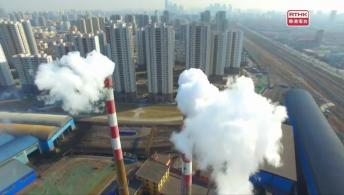
Our war on disease, is one that’s been fought throughout human history. It’s killed and maimed more people than any other conflict, and continues to challenge us. This is the story of three Chinese scientists who are working on the frontline of our battle with disease. From precision gene editing to create new animal models for testing novel drugs designed to defeat Alzheimer’s and Parkinson’s disease, to the scientists working to combat kidney disease by tackling air pollution, and cutting edge STEM cell research that promises to grow brand new, tailor-made organs to replace those damaged by disease; these ambitious goals have the potential to improve lives across the globe.
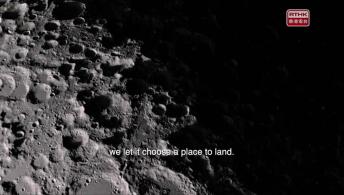
Constellations of global positioning system satellites have been orbiting the Earth for decades, but China’s new satellite network called BeiDou, which harnesses atomic hydrogen clocks for extra precision, has been built with the new age of self-driving cars in mind. These networks of satellites for navigation and communication, make our lives increasingly susceptible to space weather; the large outbursts of charged particles which the Sun periodically hurls towards Earth. So China has teamed up with the European Space Agency to mount a mission that will orbit the Earth’s polar regions, to shed light on how such Solar Storms might affect future satellites. China’s Moon exploration program, in operation since the early 2000s, has now placed two satellites in lunar orbit, and two more on the Moon’s surface; including a robotic rover in the ancient Aitken Basin the lunar far side; a first in spaceflight history. A Moon sample return mission is next, and China hopes human explorers could follow. Welcome to a new race for space.
Science is the driving force that’s changed society the most in the last few centuries. Many of these advances have come from pure science research, done simply in the pursuit of knowledge, without applications in mind. This is the story of three Chinese scientists who’ve devoted their lives to pure scientific research; looking deeper into the Cosmos, the ocean, and the atom. We reveal just what it took to build the world’s largest radio telescope; set to double the number of pulsars discovered in our galaxy. We follow the challenges of constructing the world’s most sensitive neutrino detector, deep underground in Southern China, that’s designed to measure the mass of these elusive subatomic particles. And we dive to the deep ocean with an aquanaut and marine engineer, who’s creating a new type of submarine for regular trips to the largely unexplored deep sea floor.
Technology usually advances in small steps, but there are spheres of science and engineering which are on the brink of making giant leaps that could change the world in dramatic ways. This is the story of three Chinese scientists and engineers who are leading such fields. Quantum physics has given rise to a new branch of science called quantum information, which many countries, including China, are now racing to develop. Like many western countries China has also been building advanced voice recognition systems, and coupled with the algorithms of artificial intelligence, they are already putting these to use to revolutionise everything from teaching to medical diagnostics. Industrial robotics is China’s other great innovation of the past few decades, accelerating their adoption in factories around the world; in a movement that will change the way we all work in coming years.
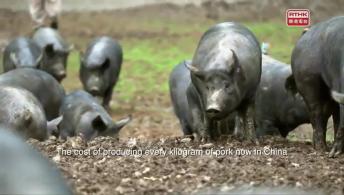
One of the greatest problems facing society today is how to feed a population set to reach ten billion by 2050. We will need to produce as much food in the next thirty years as we have done in all human history. This is the story of three scientists in China who are pushing new frontiers in farming to rise to this challenge. From the genetic editing of crops, to improve their disease resistance and prolong produce shelf life, to increasing the diversity of crops grown inside space saving vertical farms, their work is already having an impact on food production around the world. And through the surprising application of big data and artificial intelligence pig farming is also being transformed; as algorithms regulate feeding and monitor animal health, to guard against diseases such as Swine Flu.