Listen to #Hashtag Hong Kong every Sunday morning at 8.15
Focusing on issues affecting civil society, we'll hear from representatives of NGOs, associations, statutory bodies, and non-profit groups.
(Sundays 8.15am - 8.25am)
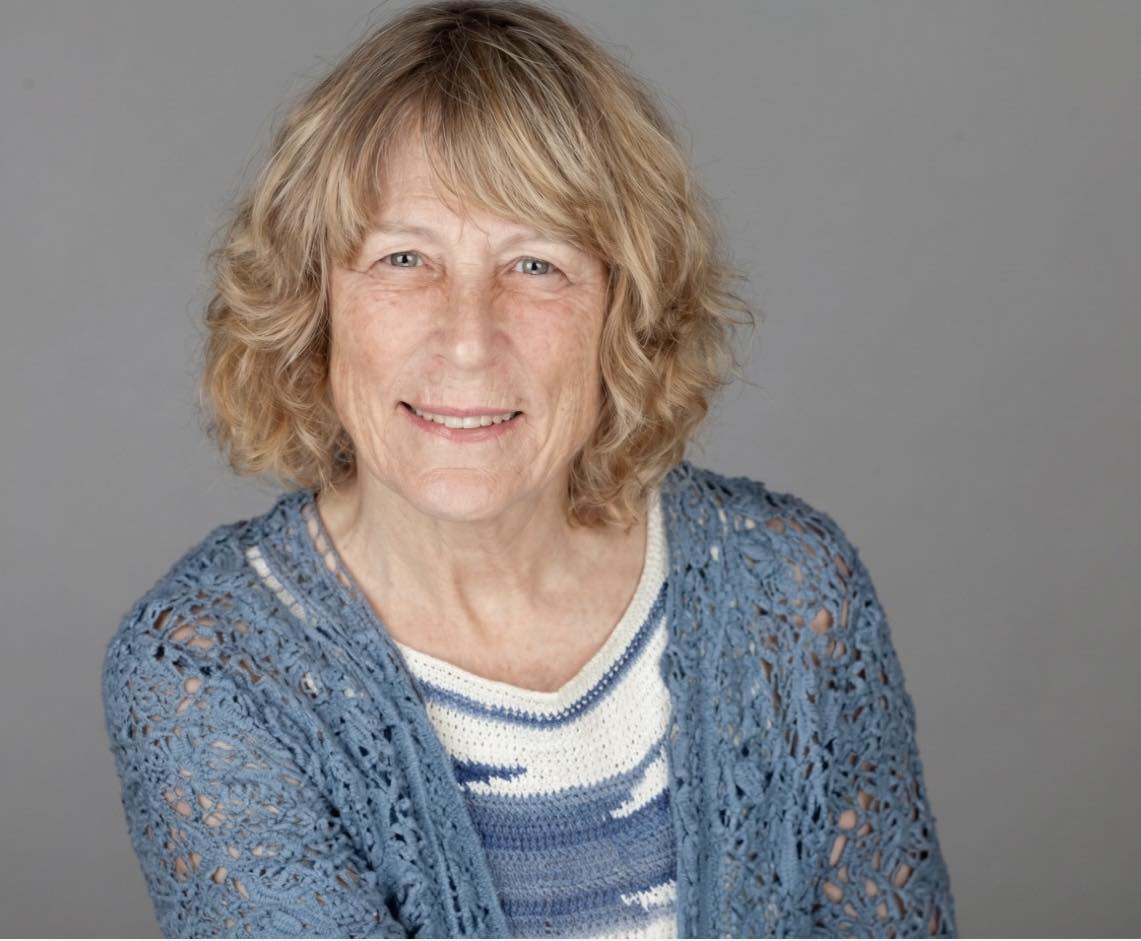

Good morning everyone!
Hong Kong is home to over 340,000 migrant domestic workers. They are the backbone of our households, caring for our children, supporting our elderly, and keeping our homes running smoothly. Yet, many face financial pressures, recruitment debt, and even fraud.
Enrich exists to change that story. I think of Eka, a migrant domestic worker from Indonesia who has lived in Hong Kong for more than 20 years. When she first arrived, she faced enormous financial pressures and struggled to manage her income. Like many women, she carried the weight of supporting her family back home while navigating life in a new city.
Eka joined Enrich’s financial and empowerment workshops, and she describes the experience as life changing. She learned how to budget, save, and plan for the future. Over time, she built the confidence to take control of her finances and even began to dream of starting her own business.
What inspires me most is her determination. Eka told me that before Enrich, she didn’t know how to manage money. Now she feels confident and knows that she can build a better future for herself and her family.
Her journey reminds us that true empowerment goes beyond statistics—it's rooted in dignity, hope, and rekindling the capacity to dream. Eka’s story reflects the resilience of so many migrant domestic workers in Hong Kong, and why Enrich’s mission matters.
Through financial and empowerment education, we help women learn to budget, save, and plan for their futures. We also provide workshops on communication, well being, and entrepreneurship. Since 2007, tens of thousands of women have joined our programmes, and many have told us how these tools gave them hope, confidence, and control over their lives.
People often ask me why I chose to lead Enrich. The answer is simple: because empowerment is transformative. When a woman learns to take charge of her finances, she doesn’t just change her own life; she changes the lives of her children, her family, and her community back home. Education is the most sustainable form of support we can offer, and I am proud to be part of an organisation that invests in women who, in turn, invest in the world.
At Enrich, we were deeply saddened by the devastating fire at Wang Fuk Court. Our hearts go out to all those affected, especially the migrant domestic workers who lost their homes and belongings, and the families that lost their sisters, daughters, and mothers. In the days that followed, we witnessed the generosity of the Hong Kong community, but we also saw opportunists trying to exploit the tragedy. That is why we dedicated our Giving Tuesday donations directly to those impacted, with a special focus on migrant domestic workers.
This March, we will celebrate International Women’s Day with one of our biggest events of the year: “Empowering MDWs: Resilience, Wellbeing & Pathways Forward.”
Today, we celebrate the resilience of migrant domestic workers and support those affected by the tragic Tai Po fire. Together with our co host, the Social Innovation Team at the Knowledge Transfer Office of the Chinese University, we will welcome migrant domestic workers and the wider community to InnoPort in Sha Tin. We chose this venue to reach more workers living and working in and around Tai Po.
The event will feature:
- Booths offering practical support, from mental health counselling and women’s health resources to financial consultation, legal aid, and upskilling opportunities.
- Interactive sessions covering financial literacy, fraud prevention, safety awareness, women’s wellbeing, and entrepreneurship.
- Wellness and art activities, such as Piloxing, artwork creation, and breathing exercises, to refresh and inspire participants.
- Booths showcasing migrant domestic worker groups and NGOs with business ideas and skill demonstrations.
This event is about more than services. It is about community, empowerment, solidarity, and pathways forward for migrant domestic workers in Hong Kong.
Reflecting on my journey with Enrich, I realize that empowerment starts with listening—listening to voices that are often overlooked and recognising their strength, resilience, and dreams. Hong Kong is a city of opportunity. Let us ensure that opportunity is shared. Let us invest in the women who invest in us every day.
I invite you to join us on International Women’s Day to stand with migrant domestic workers, celebrate their resilience, and help build a future where every woman has the tools to reach her goals.
Thank you for listening, and I hope you can support Enrich HK in some ways. Together, we are making a meaningful difference.

Thank you for inviting me to speak on this special occasion of Father’s Day. Today, I want to reflect on the crucial role fathers play in families, and the ten-year journey of our non-profit organization, DADs Network.
Across the world, extensive research confirms what many of us instinctively know: fathers do matter. Studies show that an engaged and present father has a direct, positive impact on a child’s self-esteem, academic success, future job prospects, and the stability of their relationships whether at work or at home for the long term.
On the contrary, when fathers are absent or disengaged, the consequences ripple beyond the individual child and affect society as a whole. Singapore’s Correctional Services identified a heartbreaking pattern among inmates: many of them either harbored resentment toward their fathers or had no father figure at all. Recognizing this, both government and private sectors invested in initiatives to support and equip fathers, understanding that strengthening fatherhood can help reduce crime and social issues.
Here is another example. Over the years, I’ve worked with other CEOs and leaders on employment initiatives for young people. What we’ve consistently found is this: while academic excellence and technical skills may be there, soft skills—such as resilience, empathy, and a growth mindset—are often underdeveloped. These traits, essential in today’s world (especially with AI reshaping industries), are deeply influenced by parental and father figures during a child’s formative years.
Governments and corporate social initiatives now spend enormous resources trying to equip young people with skills they could have naturally developed while growing up. It’s a massive cost to society, one that could be greatly reduced if more fathers could actively mentor and coach their children.
Hong Kong is high-pressure, fast-paced, and demanding. Navigating work and family is challenging. A six-year study of 3,000 students revealed a concerning trend—students rated their fathers as distant, both physically and emotionally. As the child grew over the 6 years, that distance only grew.
Traditionally, fathers were expected to provide financially, but not necessarily engage relationally. When my mother saw me changing my firstborn’s diaper—she was in shock. It was foreign and unnatural to her.
But here’s the good news: today’s fathers want to be involved, especially in their children's early years. However, cultural norms and systemic barriers in education, work environment, they continue to undermine efforts of fathers trying to bond with their children from birth to young adulthood and beyond.
So the big questions remain:
- How do fathers bond with their children when they’re young?
- How can that bond be nurtured through teenage years and sustained for life?
At DADs Network, we recognize that fathers of all background want the best for their children. Yet, in Hong Kong’s competitive landscape, parenting often gets outsourced to tutors, coaches, and structured activities. These external resources are great, but where’s the balance?
Fathers should ask themselves:
1. Am I prioritizing my relationship with my child?
2. Am I creating an environment where they feel safe to be vulnerable and curious with me?
Without deep engagement, fathers risk losing touch with their children over time. Unfortunately, this remains a common pattern for families in Hong Kong.
We have worked with 150 schools throughout Hong Kong impacting tens of thousands of families. The results are exciting:
- 95% of fathers commit to regular one-on-one time with their children.
- 80% continue these special father-child occasions even after six months.
- 90% of families report increased happiness and life satisfaction.
Still, fathers need more support. Unlike mothers, men often struggle to find community. 60% of Hong Kong adults don’t know where to seek help when facing difficulties. DADs Network is here to provide safe spaces where fathers connect, co-learn, and support each other.
Our approach is about lifelong learning—not textbook instructions or one-off programs. After all, your child is not a project; every child is unique. Fatherhood is an invitation to evolve, grow, face challenges, and enjoy life together.
Ten years ago, we started as pioneers—today, we’re still growing, and we’re deeply grateful. Our methodology, backed by rigorous university research, has received top government recognition, including the Outstanding Social Capital Project Award.
Yet, we’ve only reached 1% of families in Hong Kong. The majority still remain unaware, and research confirms that most father-child relationships struggle over time.
There is always hope. After 10 years, we are now ready to scale. According to the Critical mass theory, once we can get 25-30% of the families to adopt what we have been doing, this can become mainstream, to turn things around for our families and our society. There are so many communities and schools across Hong Kong that we have yet to reach. We invite leaders, educators, and everyone who believes in fatherhood to join us—whether through donations,
volunteering, or collaboration, if we can come together, there is hope to reshape fatherhood in Hong Kong.
To every father in Hong Kong: You are already making a difference, simply by showing up, playing, laughing, and embracing childhood curiosity with your kids. Fatherhood is not just a duty—it’s a joy. It’s about discovering who your child is, evolving alongside them, and keeping the bond strong for a lifetime.
I’ve been asked to choose a song, and I turned to my adult sons for ideas. They picked "Even Though I’m Leaving" by Luke Combs—and the lyrics truly touched me.
So here it is. Happy Father’s Day.