Listen to #Hashtag Hong Kong every Sunday morning at 8.15
Focusing on issues affecting civil society, we'll hear from representatives of NGOs, associations, statutory bodies, and non-profit groups.
(Sundays 8.15am - 8.25am)
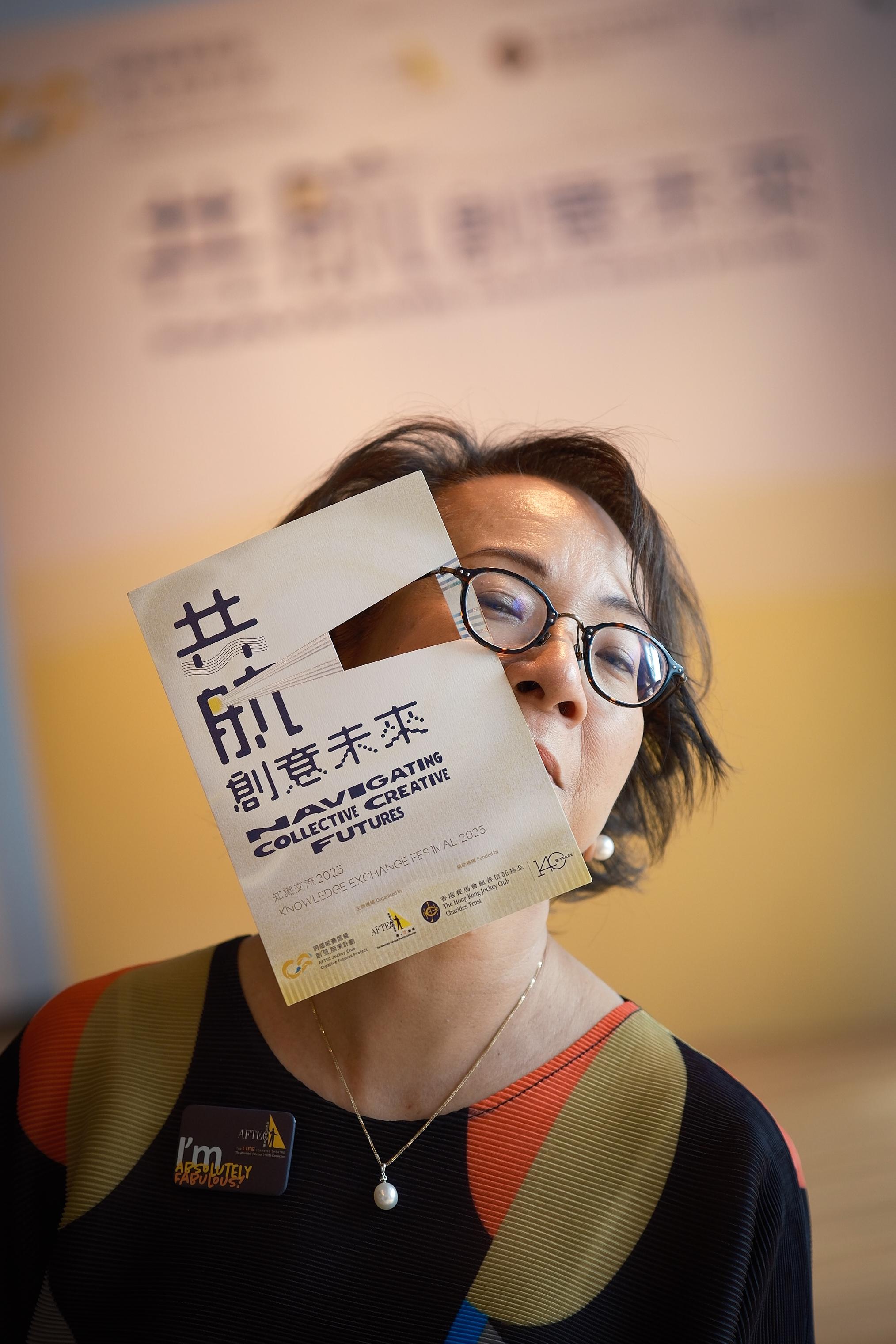

Good morning Hong Kong! On this first Sunday of 2026, I wish everyone a Happy New Year filled with hope, and all things bright and beautiful.
When we speak of the arts, what comes to mind? Performances? Exhibitions?
Perhaps your child’s dance showcase? For many professionals, the arts might be something in the back of their mind. But there’s actually a deeper, quieter power in the arts that can transform lives from within.
Let me share a story. Mr. Lee, an educator, once told us after a workshop: “Life has always been full of responsibilities. My daily routine was dull, just rushing to finish one task after another. The workshop made me realise that the arts lit up a dark cavern within me. I hope they become a set of keys for the rest of my life!” What moved him so deeply? It was more than a break from routine. The arts offered an interactive platform that engaged his emotions, sparked his imagination, and giving him a creative voice.
At the Absolutely Fabulous Theatre Connection or AFTEC, we focus on reigniting creativity. While our shows and exhibitions represent the more visible aspect of the arts, we also explore their deeper, transformative powers to create lasting social impact.
AFTEC's programs are built on strong partnerships that typically last one to three years, allowing the true magic of the arts to unfold over time. Consider the impact: so far, more than a quarter of a million students have participated in our theatre productions and various other initiatives.
A student struggling with behavior issues finds stability through the Sm-ART Youth program, which spans three years. Teenagers from disadvantaged backgrounds have won Bravo! theatre awards—one of the students has become a rising film star, while the other is now a professional dancer.
In addition, at HKU’s Medical School, future doctors develop their skills in human connection through our arts-based workshops. Why? To nuture the interpersonal abilities that no machine can replicate.
Here’s our insight: when executed effectively, arts education transforms perspectives. It opens windows and reveals new landscapes. In an age where knowledge is just a click away, creative mindsets are essential for helping both children and adults thrive.
As you know, economic poverty is devastating; however, the poverty of imagination can be just as harmful to our future. Underdeveloped imaginations confine many to a monotonous daily routine, leaving little room for inspiration. Despite advances in technology making repetitive tasks easier, valuable capacities and human potential remain untapped.
This untapped potential is our city's greatest asset because people are our most valuable resources. So, how do we cultivate it? Not by adding more tasks to the grind, but by fundamentally changing the environment in which our minds develop. This requires a shift in perspective.
First, we must prioritize the depth of creative learning over its speed. Our educational and enrichment programs should embrace a slower pace. This isn't about dismissing achievement, but about finding the right balance. Over the past five years, our Jockey Club Creative Futures program has exemplified this approach. The true reward is not just a year-end showcase but a community of practitioners dedicated to nurturing talent through critical thinking, empathy, and creative confidence.
Second, we need to reimagine the arts as the primary means of fostering human connection in an age dominated by algorithms. Beyond performances, the arts cultivate curiosity, aesthetic awareness, and critical thinking, enabling meaningful conversations. When medical students at HKU participate in our drama and movement workshops, they're not just learning to act; they’re honing their abilities to read non-verbal cues, understand patient narratives, and build the empathetic resilience necessary for leadership.
Finally, the future belongs to connectors. We must transition from subject-based training to interdisciplinary thinking. Since 2017, AFTEC has trained teachers and artists to co-design and co-teach, fostering creative partnership in classrooms. This integration of disciplines is essential for developing the broader, interconnected thinking that unlocks new solutions.
Imagine expanding this ecosystem: if parents had tools for fostering creative conversations at home and corporations embraced these workshops for their teams, artistic intelligence would complement artificial intelligence, unlocking a collective potential unmatched by technology.
This New Year, let’s recognise the arts as vital as the air we breathe, nurturing the creative and resilient minds that are Hong Kong’s greatest asset. Thank you, may your 2026 be filled with imagination.

All smoking products, including e-cigarettes, are harmful. E-cigarettes are alternative smoking products, ASPs in short form, that utilize an electronic device to heat a mixture of chemicals, commonly referred to as e-liquid, to produce an aerosol for users to inhale. The ingredients in e-liquids typically include propylene glycol, glycerin, flavoring agents, nicotine and other additives. When heated at high temperatures, this aerosol can release various harmful substances. The use of e-cigarettes is associated with increased risks of cancers, such as lung cancer and bladder cancer, as well as respiratory diseases, cardiovascular diseases, and reproductive health issues. It worths noting that while the tobacco industry promotes e-cigarettes as harm reduction products for quitting smoking, established evidence revealed its harms and continue nicotine addiction particularly in youth. When e-cigarettes first emerged in Hong Kong, the Government proposed a ban to prevent an epidemic and to stop them from becoming a gateway to smoking especially for teenagers. As of 30 April 2022, it has been illegal to import, promote, manufacture, sell, or possess for commercial purposes the alternative smoking products, including e-cigarettes and heated tobacco products. This ban also covers the devices, components, accessories, and e-liquids. After the ban, e-cigarette use persists despite not surging. According to the Thematic Household Survey Report No. 79 published by the Census and Statistics Department, about 11,600 individuals aged 15 and older were daily users of e-cigarettes in 2023, representing 0.2% of the Hong Kong population. Among Primary 4-6 and Secondary 1-6 students, the rates of current e-cigarette users were 0.2% and 1.1%, respectively, in 2022/23. E-cigarette use in adolescents is still an alarming issue. Also, flavoured tobacco and ASPs are particularly appealing to youth, serving as gateways to smoking and potentially facilitating the use of illicit drugs among teenagers. Hong Kong Council on Smoking and Health has observed that there are still misunderstandings in the public regarding the harms of smoking. Many are misled into believing that e-cigarettes or flavoured tobacco are less harmful. In fact, e-cigarettes can be even more harmful than traditional cigarettes, and flavoured tobacco, especially menthol-flavoured products, can deepen addiction. The Thematic Household Survey also found that nearly 70% of young current smokers and over 60% of female current smokers had their first smoking experience with a flavoured cigarette. Flavours such as menthol and fruit, introduced by the tobacco industry, significantly encourage teenagers and women to try smoking and continue the habit. Flavoured tobacco harms our next generation by increasing addiction levels, making it harder for young people to quit. The latest Tobacco Control Policy-related Survey reveals a higher rate of flavoured cigarette use among teenagers and women. With over 86% of female smokers aged 15-29 opting for flavoured cigarettes—the highest among all age groups. The survey found that nearly 40% of teenagers who use flavoured cigarettes are moderately to severely addicted, which is double the rate among those using non-flavoured cigarettes. It also indicated that young smokers of flavoured cigarettes are more likely to use ASPs, including e-cigarettes and heated tobacco products. Teenagers and women are increasingly drawn to flavoured tobacco products, often showing preferences for specific flavours and brands. This trend heightens the likelihood of taking up smoking, developing an addiction, and continuing the habit. Certain flavourings, such as menthol, cocoa, and sweeteners, can enhance nicotine absorption and its effects on the brain, exacerbating addiction and leading smokers to smoke more frequently and for longer periods, making it harder to quit. According to the survey, over 70% of the public supports banning flavoured tobacco products, and this figure continues to rise. It is a clear indication of societal support for a ban and the urgent need for legislation. COSH recommends a comprehensive ban on all flavoured tobacco products, including menthol and any substances or accessories that could add flavours to cigarettes. Besides, possession of alternative smoking products in any form is also recommended to be prohibited. The Government published the Tobacco Control Legislation (Amendment) Bill 2025 (the Bill) in the Gazette in April 2025. This Bill proposes amendments to existing legislation to facilitate the implementation of a new phase of tobacco control measures. It is currently under discussion at the Legislative Council. COSH urges the Council to pass the legislation promptly, allowing for the comprehensive implementation of tobacco control policies to enable the next generation of Hong Kong to grow up with more vitality and better health.