熱門

X

    內容

    CONTENT
    09/07/2025

    Hong Kong generates around 11,000 tonnes of municipal solid waste (MSW) daily, most of which ends up in landfills. With limited land resources and ever-increasing waste, landfills are approaching full capacity. To tackle this, the government has accelerated the development of "Waste to Energy" facilities, such as incinerators (I·PARKs), sludge treatment facilities (T·PARK), and organic waste recovery centres (O·PARKs). These aim to reduce landfill reliance and turn waste into valuable resources.

    Incineration technology, already widely used overseas, will soon be introduced to Hong Kong with the completion of the first next-generation incinerator (I·PARK1) in 2025. It is expected to process 3,000 tonnes of MSW daily and convert waste into electricity. Older incinerators were known to release harmful pollutants like dioxins, but how will this new technology minimizes emissions? What other environmental policies can support its implementation?

    集數

    EPISODES
    • Building tomorrow

      Building tomorrow

      In recent years, green buildings have become a growing trend in the construction industry. Many people believe that installing solar panels or implementing greening projects automatically makes a building environmentally friendly. But is this really the case?

      Buildings account for nearly 90% of Hong Kong's total electricity consumption, with residential homes, offices, and shopping malls contributing to nearly 60% of the city’s carbon emissions. Achieving energy savings and emission reductions through buildings is no easy task. On top of that, Hong Kong has over 40,000 existing older buildings. How can these aging structures be retrofitted to improve energy efficiency? What methods can be employed?

      23/07/2025
    • Carbon Catchers

      Carbon Catchers

      Emission reduction is urgent as global warming and extreme weather events ravage the world. Reducing greenhouse gas emissions has become a consensus among humans. "Absorbing" and "locking" carbon dioxide from the atmosphere, preventing its release back into the air, has become another new endeavor alongside emission reduction.

      Simpler in structure than humans, microalgae, single-celled organisms that have existed in oceans and rivers for millions of years, are natural carbon absorption experts. Microalgae, invisible to the naked eye, are a few micrometers in size and, like trees, rely on photosynthesis for survival. During photosynthesis, microalgae's chlorophyll converts carbon dioxide into proteins, carbohydrates, and fats while producing oxygen, thereby helping to reduce greenhouse gases in the atmosphere.

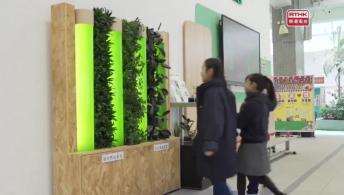
      Young research teams in Hong Kong have set up demonstration sites to cultivate and breed microalgae in specially designed tanks. They have devoted great effort and explored various methods to enhance the carbon absorption capacity of microalgae, with the goal of industrializing microalgae cultivation and promoting it worldwide. Local innovation and technology companies have also commercialized the "carbon absorption experts" by installing fluorescent green "microalgae reactors" in schools and other locations. These reactors use air pumps to draw air into water-filled containers to cultivate microalgae, aligning with organizations' carbon reduction goals under ESG reporting.

      Microalgae may be the "carbon absorbers," but their life cycle is short, and they gradually release carbon dioxide back into the atmosphere. Scientists in other fields continue to unleash their unlimited creativity by attempting to directly "absorb" carbon dioxide from the air. Some Western countries have already invested in the construction of large-scale facilities to capture atmospheric carbon dioxide and store it underground. In Hong Kong, researchers at universities have made preliminary developments in the "carbon dioxide reduction system," which converts carbon dioxide into raw materials for plastic chemicals. In the future, this system could potentially be applied in industrial projects to promote carbon neutrality.

      Of course, tree planting remains a crucial strategy for "carbon sequestration" at present. Trees naturally reduce carbon dioxide through photosynthesis. Environmental organizations collaborate with universities to study five different types of forests in various locations in Hong Kong. By measuring plant data using instruments after selecting suitable locations, they estimate the "carbon storage" of Hong Kong's forests and their potential for carbon dioxide removal. The aim is to assist the government in formulating policies to enhance the carbon absorption capacity of forests, ensuring that forests continue to serve as a major force for "carbon sequestration" in nature.

      The extent of microalgae's carbon absorption capacity is still under research. Trees can store carbon dioxide in trees and soil for long periods. Can microalgae have a similar "carbon sequestration" effect? How effective is machine-based carbon capture? These questions still require further exploration by the academic and environmental sectors.

      16/07/2025
    • Waste Into Watts

      Waste Into Watts

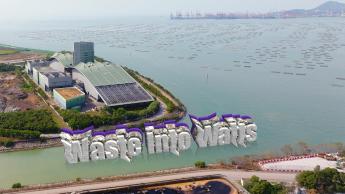
      Hong Kong generates around 11,000 tonnes of municipal solid waste (MSW) daily, most of which ends up in landfills. With limited land resources and ever-increasing waste, landfills are approaching full capacity. To tackle this, the government has accelerated the development of "Waste to Energy" facilities, such as incinerators (I·PARKs), sludge treatment facilities (T·PARK), and organic waste recovery centres (O·PARKs). These aim to reduce landfill reliance and turn waste into valuable resources.

      Incineration technology, already widely used overseas, will soon be introduced to Hong Kong with the completion of the first next-generation incinerator (I·PARK1) in 2025. It is expected to process 3,000 tonnes of MSW daily and convert waste into electricity. Older incinerators were known to release harmful pollutants like dioxins, but how will this new technology minimizes emissions? What other environmental policies can support its implementation?

      09/07/2025
    • Sustainable Agriculture

      Sustainable Agriculture

      Although locally produced fishery and agricultural products account for only a small proportion of total consumption, local products are still particularly appealing to many consumers. In the face of high production costs, a shortage of talent, land scarcity, and pressures for upgrading and transformation, how can the local fishery and agricultural sector overcome these challenges and continue to operate?

      02/07/2025
    • Zero Emission

      Zero Emission

      Zero Emission
      The government has been actively promoting green transportation and has implemented a series of measures to reduce carbon emissions in the transport sector, such as offering tax incentives for electric vehicles, formulating the Strategy of Hydrogen Development in Hong Kong, launching the New Energy Transport Fund, and introducing the Electric Mobility Devices Trial Set. However, the promotion process still faces challenges, including insufficient charging facilities, higher costs, and limitations in technology and infrastructure.

      Few years ago, the government unveiled the Hong Kong Climate Action Plan 2050, aiming to achieve zero vehicle emissions and a carbon-neutral transport sector by 2050 through measures such as promoting vehicle electrification and developing new energy transport solutions. Currently, greenhouse gas emissions from transportation remain the second-largest source, accounting for nearly 20% of Hong Kong's total emissions. Is achieving zero vehicle emissions by 2050 an impossible mission?

      25/06/2025
    • A Plastic Free Future

      A Plastic Free Future

      A Plastic Free Future
      According to the latest monitoring of solid waste report by the Environmental Protection Department, Hong Kong disposes of 2,369 tonnes of plastic waste in landfills daily, equivalent to the volume of 80 double-decker buses, highlighting the urgent need to reduce plastic waste. Starting April 22, 2024 the ban on single-use plastic products prohibits businesses from providing or selling items like disposable foam tableware, plastic straws, cutlery, cotton swabs, and inflatable cheering sticks. Restaurants are also barred from offering disposable plastic cups and containers for dine-in customers.

      Many "green tableware" products use water-based coatings containing small amounts of plastic to resist water and oil, but these differ from biodegradable plastics. Although recyclable and suitable for pulping, proper plastic separation is essential; otherwise, the plastic may end up in the ocean as microplastics.

      How can citizens recycle effectively? What obstacles do they face? Could green technology be the key to reducing plastic pollution?

      18/06/2025
    • Paradise Preserved

      Paradise Preserved

      Hong Kong's wetlands are primarily located near the Inner Deep Bay, with Mai Po designated as a Wetland of International Importance under the Ramsar Convention. Each year, over 100,000 waterbirds migrate to these wetlands to rest and refuel, including several globally endangered species.

      Earlier this year, the Agriculture, Fisheries and Conservation Department (AFCD) launched public engagement activities for the proposed Sam Po Shue Wetland Conservation Park. However, environmental groups have raised concerns over recurring damage to protected wetlands in recent years, including illegal dumping and landfilling, which threaten bird habitats.

      Over the years, the government has used various approaches to conserve wetlands. How can these experiences help in building a comprehensive wetland conservation park system in the future?

      11/06/2025
    • Eco on Trend

      Eco on Trend

      To keep up with trends, fashion brands launch new designs every season, allowing consumers to purchase stylish clothing at low prices and with quick turnaround. According to the Monitoring of Solid Waste in Hong Kong 2022, 388 tonnes of old clothing and textiles are discarded in local landfills every day, equivalent to 2.7 million T-shirts.

      However, growing awareness of the environmental damage caused by the fashion industry has sparked efforts to change the "fast fashion" culture. Jasmine Leung, a local fashion designer, has founded a sustainable fashion brand that uses natural, biodegradable fabrics. Her designs incorporate materials made from fibres derived from roses, oranges, bananas, and other natural sources, creating clothing that is both stylish and eco-friendly.

      Beyond sustainable design, the roles of consumers and producers are equally crucial. In Mong Kok, Tiffany Wong has opened a second-hand fashion store to challenge stereotypes about pre-owned clothing. Meanwhile, the non-profit organization Redress collects and sorts old clothes, providing alternative uses for discarded garments. Additionally, a local textile factory has begun recycling old school uniforms, using advanced technology to break down fabrics into fibres, which are then rewoven into yarn to produce new textiles, giving old clothing a second life.

      04/06/2025