Brand New RTHK On The Go
One App for All RTHK Radio & TV programmes
Get


Focusing on issues affecting civil society, we'll hear from representatives of NGOs, associations, statutory bodies, and non-profit groups.
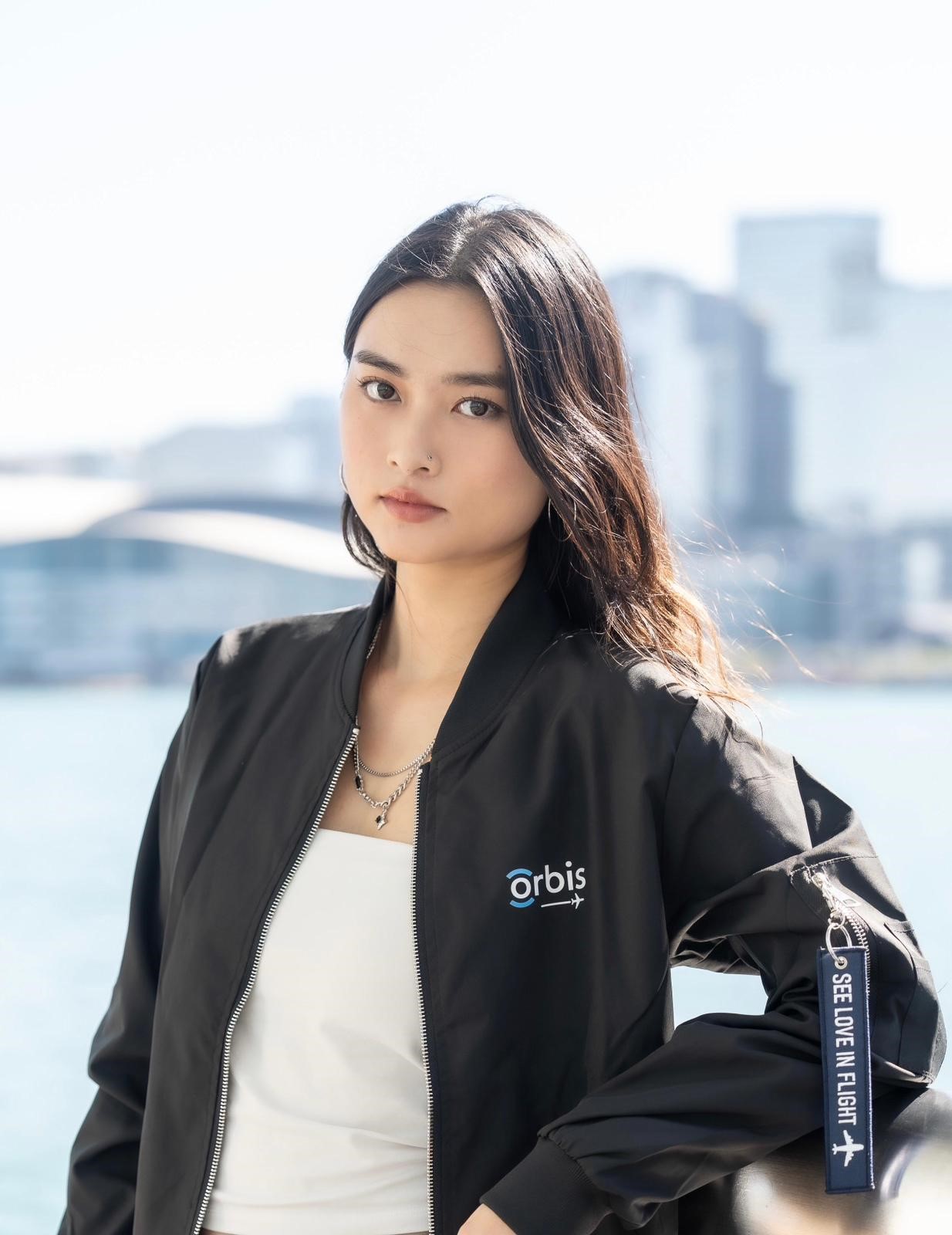

Good morning, thanks for having this morning. At Orbis, we have a simple belief: protecting vision isn’t just a medical issue; it’s a community responsibility. Every one of us has a part to play in helping others keep sight safe. Today, I’d like to tell you a story - the story of Hong Kong’s aging eyes, and why half of our population may soon face serious vision challenges.
When you think of Hong Kong, what comes to mind? Neon lights, the serene views, the dense forest of skyscrapers. We are a city that sees the world in colour and in movement. But behind that beauty, a silent crisis has been developing among our older population.
In late 2025, Orbis collaborated with the Department of Ophthalmology at HKUMed to release results from the largest community glaucoma-screening project ever done in Hong Kong. The results were a wake-up call, not just for everyone over 50, but for everyone who loves someone over 50.
As we age, our bodies begin to change - gently, and gradually. But within our eyes, something more dangerous starts to happen: the risk of vision-threatening diseases rises sharply after 50.
The three biggest culprits here in Hong Kong are: cataracts, age-related macular degeneration, and glaucoma. Cataracts are like looking through a frosted dirty window. The world turns cloudy and dim. Thankfully, surgery can restore clear sight.
Age-related macular degeneration (AMD) attacks your central vision. It’s what you use to read, drive, or recognize a loved one’s face. It may not cause total blindness, but it steals your quality of life.
And then, there’s glaucoma, the silent thief of sight. It creeps in slowly, quietly damaging the optic nerve - the delicate cable that connects the eye to the brain. There’s no pain. No early symptoms. You don’t even know it’s happening… until a quarter of your vision is already gone.
Once those nerve fibers die, they’re gone forever. We can’t bring them back. All we can do is stop more from dying, curb it from getting worse, stop one from becoming blind. For years, we suspected glaucoma was widespread in Hong Kong. But we didn’t know how widespread or common it was - until now.
Over two years, Orbis and HKUMed conducted a project we called Vision Matters. We went into public housing estates, from Southern District, Kwun Tong and Taipo etc, inviting residents aged 50 and above for free, comprehensive eye exams. More than 5,800 people across our city took part.
The results were staggering. We found optic-nerve degeneration in 11.6 percent of participants, and confirmed glaucoma in 6.9 percent of them. For context, that’s higher than previous estimates across the entire Chinese population.
So, what’s going on? Is Hong Kong somehow “sicker”? Not necessarily. In truth, the difference lies in the technology. We were only able to identify these occurrences because of the technology we used. Our study used an AI-powered tool called ROTA to identify at-risk patients. Now, a traditional scan can tell you if your optic nerve - imagine a rope - is getting thinner. But ROTA goes deeper. It shows whether the threads within that rope are beginning to fray. This means it can catch glaucoma damage far earlier, often before patients notice a single symptom.
Currently, if referred to a specialist out-patient clinic, the wait time can be as long as 117 weeks. That is over two years. For glaucoma, two years of waiting means two years of irreversible vision damage.
Here’s how AI integration changes a lot of everything. Because when a doctor spots even the smallest hint of trouble, AI can help flag high-risk patients faster, triage them sooner, push them to the front of the list and make sure they see a specialist in time.
It won’t erase the two-year waiting list overnight, but it could save sight before it’s too late.
Our AI-powered diagnostic system will soon be deployed in Hong Kong West and Kowloon East clusters. And that’s what Orbis does best: bridging innovation and humanity. Around the world, our team ensures that innovation travels faster than distance. The fight against blindness is no longer just about scalpels and predictions. It’s about data and predictions. It’s about catching the thief before it steals your sight.
Through Cybersight AI, a groundbreaking Orbis diagnostic platform, specialist-level eye screening can be “air-dropped” into even the most remote villages. Imagine this: a local nurse in a rural community takes a photo of a patient’s retina. Within seconds, the AI detects early signs of blinding diseases and alerts doctors miles away. That speed and that precision can be the difference between permanent vision loss and a lifetime of sight.
But here’s the truth: technology alone isn’t the hero.
People are. AI is just a tool - one that amplifies the reach of doctors and empowers local health workers. It filters out routine cases, so specialists can focus on the most urgent, life-changing ones.
Yet, even the smartest technology can’t succeed without trust. In Ethiopia, for example, Orbis trains local women as community eye-care workers - women their neighbours already know and trust. In Vietnam, we adapt our workflow to match local customs and patient habits, because technology must fit people, not the other way around.
And through every project, from Hong Kong’s urban neighbourhoods to the world’s most remote corners, one message shines through:
Technology guards vision; trust connects communities.
Together, they build a bridge - from innovation to impact, from city to village, from research to real lives. And that bridge is how Orbis makes sure no one, anywhere in the world, is left in the dark.
We live in a city of dazzling lights. Let's make sure we can all see them, clearly and safely, for years to come.

Did you know that over 90% of deaf or children with hearing loss are born to hearing parents? For most families, the diagnosis is unexpected, and the journey ahead is full of unfamiliar challenges. But with the right support, no family has to walk alone. Let me share with you the journeys of two extraordinary children and their families—stories that have moved us deeply and show the hope and strength that can grow from even the hardest beginnings. The first is about a little girl, Mary, who at just six months old was diagnosed with meningitis. The illness left her with hearing loss, but it wasn’t discovered until she was four years old. For years, her world was far quieter than it should have been. She was fitted with hearing aids at four, and by five, she came to our Early Education and Training Centre for speech therapy. When I first met her, she had barely any words to share her thoughts with her family or classmates. And yet, her determination shone through—she was always trying to communicate, using gestures, sounds, and expressive looks to reach out, even when words couldn’t fully express her needs. Her mother, from a low-income background, carried an enormous sense of guilt and uncertainty. She had high hopes for her daughter, but the road ahead was full of unknowns. Facing various hearing assessments and navigating the educational system, she felt overwhelmed and alone. And this is where the power of teamwork changed everything. Our team worked closely with doctors and audiologists to explore all options for Mary, including the recommendation of cochlear implant surgery to improve her hearing. At the same time, we facilitated visits to suitable special schools, ensuring Mary and her mother gained a thorough understanding of each step and decision. Thanks to everyone’s commitment, Mary was able to transfer to a school with specialized support. There, she finally had access to teachers who understood her needs, therapists who could help her grow, and a community that believed in her potential. Today, Mary is thriving—using sentences and signs, laughing with friends, and sharing her ideas with her family. Her mother’s guilt has been replaced by hope and pride, and now her daughter truly has a voice—one that is heard and valued. The second story is equally powerful. Another young girl, Kate, came to us with a significant hearing loss present since birth. Like so many, her condition went unnoticed until later. When she arrived at our Centre, she had a limited vocabulary of single words—her world of expression significantly smaller than her world of ideas. Kate’s mother collaborated closely with our team, and we assessed Kate's specific needs and provided tailored individual and group training, which included auditory rehabilitation, speech, language, and fluency. What moved us most was the humility and gratitude of Kate’s mother. She told us that although she came for her daughter’s sake, she ended up learning resilience from her child. It was her daughter’s perseverance and determination that inspired her to grow stronger as a parent and as a person. These are the reasons our work at the Hong Kong Society for the Deaf matters. As the largest NGO in Hong Kong supporting the Deaf community, we walk with families every step of the way. We provide audiological assessments, speech therapy, educational support, counselling, and guidance on hearing aids and cochlear implants—not as individuals, but as a team, supporting each child and family together. Most importantly, we help every family find the meaning of communication. Not every child will speak. Not every child will sign. What matters is that they are understood, included, and respected. That’s why your generous support is incredibly important. Your donation helps us reach more families and individuals with hearing loss. Together, we can create a world where children with hearing loss are seen for their promise, not their limitations. To learn more about our work or to make a donation, please visit our website at www.deaf.org.hk. As I close, I want to dedicate a song that has brought comfort and courage to so many—“You’ll Never Walk Alone”by Gerry & The Pacemakers. Its message is one of hope, solidarity, and community: no matter how hard the road or how fierce the storm, we walk forward together, and no one is left behind. That’s what we believe—and that’s what we work for, every day. Let’s build a Hong Kong where every child’s voice—in whatever form—truly matters.