熱門

X

    內容

    CONTENT
    05/05/2025
    相片集
    相片集

    在數個世紀前,一個多山、四周是茂密森林、潺潺溪流的沿海島嶼,被北美洲的原住民——萊納佩人稱為「曼納哈塔」的地方,眨眼之間演變成今天的曼哈頓。溪流變成道路,海灘變成碼頭,樹木變成摩天大樓。現代城市是我們為自己打造的新生態系統,現在有半數人類生活於城市,而且數量與日俱增,我們的城市未來將會是甚麼樣子?

    在這一集尚恩的旅程由紐約市開始,在當地專家的帶領下,他展開一場難忘的捕鼠之旅。尚恩與波多黎各一位研究夥伴重新聯繫,在城市捕捉城市蜥蜴,探索自然界如何在短短數十年間重塑了牠們的體型和生理。在三藩市,尚恩發現當地居民對對市內不斷增加的土狼數量態度各異。一位城市生態學家向尚恩展示城市中的不平等如何危害人類和野生動物。最後,新加坡之行讓尚恩大開眼界,改變了他對城市未來發展的願景。

    城市或許是人類最偉大的發明——我們原本只想創造一個居住地方,但最終卻建立了一個全新的生態系統。城市為人類和野生動物帶來挑戰,但亦有助我們繁榮發展。這就是為什麼城市會繼續存在、為什麼我們應努力讓城市變得更好、更綠化、更公平,不只是為了人類,也是為了大自然。

    雙語廣播: 粵語/英語 (電視版 及 網上版)
    播出時間: (首播) 2025年5月5日 星期一 晚上10時

    In a few short centuries, the island the Lenape called “Mannahatta” – a land of forests, streams, and coastal villages – was transformed into Manhattan. Streams turned into roads, beaches became docks, and trees gave way to skyscrapers. The modern city is a new ecosystem built by us, for us. With half of all humans living in cities already – and more every day – what does our urban future hold?

    Shane’s journey begins in New York City, where a “rat safari” with a local expert leads him to join an unforgettable rat hunt with a pack of tiny, ferocious terriers. Next, Shane re-connects with a scientific collaborator in Puerto Rico, where they lasso city-dwelling lizards to discover how natural selection has reshaped their physiques and physiology in just a few decades. In San Francisco, Shane goes looking for coyote poop and finds a spectrum of attitudes toward the city’s growing coyote population. An “urban ecologist” shows Shane how inequality in cities can harm people and wildlife. Finally, an eye-opening visit to Singapore leaves Shane pondering a different, wilder vision of the future of cities.

    Cities might just be humanity’s ultimate invention – we set out to create a place to live, but we ended up building a whole new ecosystem. Cities create challenges for humans and wildlife alike, but they can also help us flourish. That’s why cities are here to stay, and why we should push to make them better, greener, and more equitable… not just for us, but for nature too.


    Bilingual: Cantonese/ English (TV Version & Web Version)
    Time: (First run) 2025.05.05 MON 10:00pm


    網上重溫至 05/05/2026

    集數

    EPISODES
    • 足下之地

      足下之地

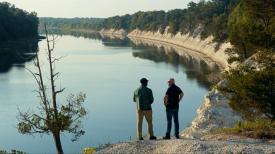
      人類足跡不僅是我們改變世界的方式,亦是人類與地球之間跨越過去與未來的聯繫。我們改變世界,世界也反過來改變我們。在尚恩長大的美國南部,一片古老海洋孕育出一種農作物,以及人類為培育它而創造的殘酷經濟,永久重塑了我們的世界。

      這趟旅程從阿拉巴馬州伊普斯的白堊岩開始,一片八千萬年前隱藏於海床、黑土帶的岩石,為美國棉花產業提供肥沃土壤。十九世紀,全球的棉花經濟在非裔奴隸的勞動力上建立起來,對美國的土地、文化,甚至美國人的遺傳基因產生了深遠影響。美國南北戰爭結束了奴隸制,但棉花的影響通過大遷徒、黑人音樂、文化的傳播繼續發展,正因這些,白堊紀時代的海濱今天顯現為公民行使合法投票權的「藍色地帶」。

      棉花的故事正是人類足跡的精髓:在微小化石的基礎上,一群人奴役另一群人,為工業提供動力,重塑了地貌、文化和美國人民的基因。人類改變世界、重新定義命運的力量從未如此清晰,正如尚恩在旅途中發現,「人類足跡的這部份結果就是——我」。

      雙語廣播:粵語/英語 (電視版 及 網上版)
      播出時間:(首播) 2025年5月12日 星期一 晚上10時

      The Human Footprint is more than just the ways in which we transform the world. It’s the connection between humanity and our planet – past and future. We change the world, and the world changes us back. In the American South, where Shane was raised, a primeval ocean allowed one crop – and the cruel economy we crafted to nurture it – to reshape our world forever.

      The journey begins at the White Cliffs of Epes, Alabama, where the rocks underneath the Black Belt – the rich soils that supported America’s cotton industry – are laid bare as an 80-million-year-old seafloor. In the 19th century, a global cotton economy was built here on the backs of enslaved Africans, creating profound impacts on America’s land, cultures… and even our DNA. The Civil War ended slavery, but the legacy of cotton continued to grow through the Great Migration and the spread of Black music and culture. Because of that influence, the shores of a Cretaceous sea are revealed today as a “Blue Belt” of citizens exercising their legal right to vote.

      The story of cotton is the essence of the Human Footprint: on a foundation of microscopic fossils, one group of people enslaved another to power an industry – reshaping a landscape, a culture, and the very DNA of the American people. The power of humanity to transform the world, and redefine our destinies, has never been more clear. As Shane realizes during his journey, “This part of the Human Footprint… is me.”

      Bilingual: Cantonese/ English (TV Version & Web Version)
      Time: (First run) 2025.05.12 MON 10:00pm

      12/05/2025
    • 城市森林

      城市森林

      在數個世紀前,一個多山、四周是茂密森林、潺潺溪流的沿海島嶼,被北美洲的原住民——萊納佩人稱為「曼納哈塔」的地方,眨眼之間演變成今天的曼哈頓。溪流變成道路,海灘變成碼頭,樹木變成摩天大樓。現代城市是我們為自己打造的新生態系統,現在有半數人類生活於城市,而且數量與日俱增,我們的城市未來將會是甚麼樣子?

      在這一集尚恩的旅程由紐約市開始,在當地專家的帶領下,他展開一場難忘的捕鼠之旅。尚恩與波多黎各一位研究夥伴重新聯繫,在城市捕捉城市蜥蜴,探索自然界如何在短短數十年間重塑了牠們的體型和生理。在三藩市,尚恩發現當地居民對對市內不斷增加的土狼數量態度各異。一位城市生態學家向尚恩展示城市中的不平等如何危害人類和野生動物。最後,新加坡之行讓尚恩大開眼界,改變了他對城市未來發展的願景。

      城市或許是人類最偉大的發明——我們原本只想創造一個居住地方,但最終卻建立了一個全新的生態系統。城市為人類和野生動物帶來挑戰,但亦有助我們繁榮發展。這就是為什麼城市會繼續存在、為什麼我們應努力讓城市變得更好、更綠化、更公平,不只是為了人類,也是為了大自然。

      雙語廣播: 粵語/英語 (電視版 及 網上版)
      播出時間: (首播) 2025年5月5日 星期一 晚上10時

      In a few short centuries, the island the Lenape called “Mannahatta” – a land of forests, streams, and coastal villages – was transformed into Manhattan. Streams turned into roads, beaches became docks, and trees gave way to skyscrapers. The modern city is a new ecosystem built by us, for us. With half of all humans living in cities already – and more every day – what does our urban future hold?

      Shane’s journey begins in New York City, where a “rat safari” with a local expert leads him to join an unforgettable rat hunt with a pack of tiny, ferocious terriers. Next, Shane re-connects with a scientific collaborator in Puerto Rico, where they lasso city-dwelling lizards to discover how natural selection has reshaped their physiques and physiology in just a few decades. In San Francisco, Shane goes looking for coyote poop and finds a spectrum of attitudes toward the city’s growing coyote population. An “urban ecologist” shows Shane how inequality in cities can harm people and wildlife. Finally, an eye-opening visit to Singapore leaves Shane pondering a different, wilder vision of the future of cities.

      Cities might just be humanity’s ultimate invention – we set out to create a place to live, but we ended up building a whole new ecosystem. Cities create challenges for humans and wildlife alike, but they can also help us flourish. That’s why cities are here to stay, and why we should push to make them better, greener, and more equitable… not just for us, but for nature too.


      Bilingual: Cantonese/ English (TV Version & Web Version)
      Time: (First run) 2025.05.05 MON 10:00pm

      05/05/2025