熱門

X

    內容

    CONTENT

    監製:YAU ANNIE, YEUNG WAI NGA

    30/06/2026

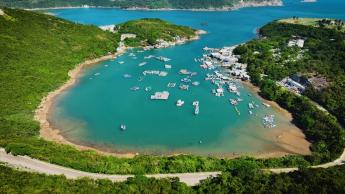
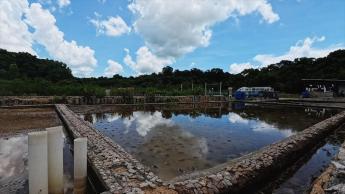
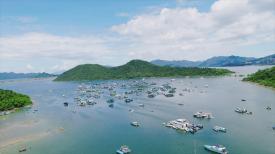
    In Sai Kung Hoi, there are many different kinds of small islands forming the unique seascape. On one of the small islands which is surrounded by the sea on four sides, there is the only remaining salt pan in Hong Kong. The technique and equipment for making salt with sea water had disappeared for over a century. The village representative CHAN Chung-yin, with his affection for the homeland, insisted to bring back the salt pan. To CHAN, this means not only a stream and a grain of sea salt, but an important witness to the nurturing of ten generations of Yim Tin Tsai villagers.

    On the island, there is a Hakka village with a history of 300 years. Given the changes of time, all inhabitants on the island moved out in the 1990s, and the island has once become deserted. Nevertheless, the beautiful coastal scenery has attracted LIU Wai-fung and his wife to move from the urban area and settle down here. He even transformed a dilapidated village house into a stylish small house himself to live a unique seaside life.

    Bond SHUM, the ecology researcher, has discovered the lively side of this tranquil island. Having conducted ecological research in Yim Tin Tsai for more than a year, he observed that diverse species shine through on this small island. In this episode, let’s see how three persons from different backgrounds came to the only salt island in Hong Kong with their own sentiments!

    集數

    EPISODES
    • Bonding with the Salt Island

      Bonding with the Salt Island

      In Sai Kung Hoi, there are many different kinds of small islands forming the unique seascape. On one of the small islands which is surrounded by the sea on four sides, there is the only remaining salt pan in Hong Kong. The technique and equipment for making salt with sea water had disappeared for over a century. The village representative CHAN Chung-yin, with his affection for the homeland, insisted to bring back the salt pan. To CHAN, this means not only a stream and a grain of sea salt, but an important witness to the nurturing of ten generations of Yim Tin Tsai villagers.

      On the island, there is a Hakka village with a history of 300 years. Given the changes of time, all inhabitants on the island moved out in the 1990s, and the island has once become deserted. Nevertheless, the beautiful coastal scenery has attracted LIU Wai-fung and his wife to move from the urban area and settle down here. He even transformed a dilapidated village house into a stylish small house himself to live a unique seaside life.

      Bond SHUM, the ecology researcher, has discovered the lively side of this tranquil island. Having conducted ecological research in Yim Tin Tsai for more than a year, he observed that diverse species shine through on this small island. In this episode, let’s see how three persons from different backgrounds came to the only salt island in Hong Kong with their own sentiments!

      30/06/2026
    • Living by the Tuen Mun River

      Living by the Tuen Mun River

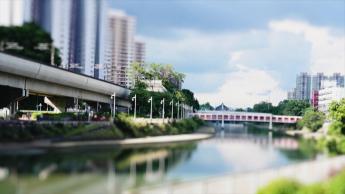
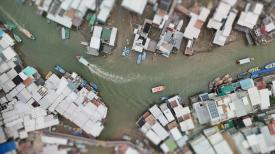
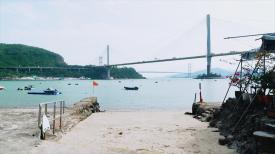
      The Tuen Mun River runs through the entire Tuen Mun new town, connecting different areas of the district. Although the river channel changed with the new town development, the warmth in the community along the riverbanks remains unchanged.

      The dragon boat race is an annual major event in the Tuen Mun River and Castle Peak Bay area. Not only is it a local tradition, but it also brings people together, as the then “new immigrants” moving into the public housing estates in Tuen Mun formed a dragon boat team to join the grand event. Over the decades, team members from the elder generation have passed the torch to the younger generation, sustaining the power of unity.

      The Tuen Mun River not only unites people in sports, but also inspires diverse artistic ideas. Writer MAK Shu-kin has been living by the Tuen Mun River for nearly 20 years. He has written themed works on the River, and felt the subtle influence of “water” on his creations.

      Kay is an indigenous inhabitant of Tuen Mun. After participating in a public art project on the Tuen Mun riverside, she had an opportunity to rediscover the Tuen Mun River and reflect on her relationship with the River.

      23/06/2026
    • The Lam Tsuen River Keeps the Flow

      The Lam Tsuen River Keeps the Flow

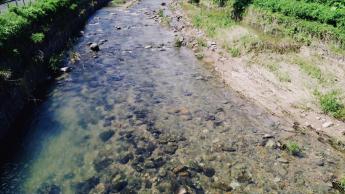
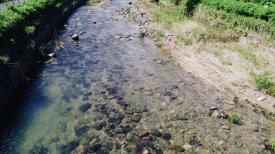
      The Lam Tsuen River originates from Tai Mo Shan with its watercourse stretching over 10 kilometres. It flows through Chai Kek, Tong Min Tsuen and the town centre of Tai Po, before it finally reaches Tolo Habour. It is a river weaving through both forested and urban areas, nurturing unique cultural landscapes.
      Chai Kek at the upstream is one of the few places in Hong Kong that retains the original landscape of natural rivers and streams. Ecologist Dr Ken SO leads urban dwellers into the riverbed to feel in person the temperature of the flowing water and its breath of life, and explore the biodiversity therein.
      She Shan Tsuen at the midstream is a Hakka village with a history of over 200 years. The trees in the Fung Shui wood on the hillside behind the village were planted by the ancestors of the village representative CHAN San-kwai. The trees not just block the wind and stabilise the land, but also have their own uses. One huge old camphor tree in the wood, which is even older than the village itself, has become the collective memory of villagers.
      Wallace is a ceramic artist deeply inspired by the Lam Tsuen River. He uses clay to record textures of the nature. He wanders into the Fung Shui wood and transforms the trees and clay into artworks carrying memories.
      The river continues its journey through the urban areas of Tai Po and reaches Tolo Harbour. The Coral Academy of the Chinese University of Hong Kong and the Agriculture, Fisheries and Conservation Department are now working together in remediation for the harbour to restore the beauty of this underwater garden where coral once flourished. Life needs to be nurtured, and so does the river. The Lam Tsuen River is not just a waterway, it is also a story intertwining human and the nature.

      16/06/2026
    • Looking After Shui Hau

      Looking After Shui Hau

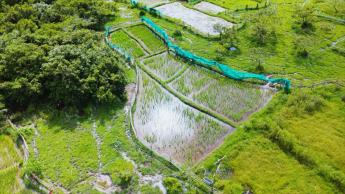
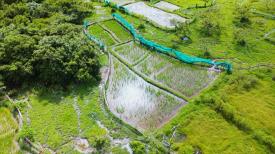
      The 400-year-old Shui Hau Village is so inseparable with water that “Shui Hau” means “the outlet of a river”. Nestled between mountains and rivers, Shui Hau Village is surrounded by hills, mudflats and wetland. Villagers used to make a living by farming until the 1970s, when many of them were dragged away from agriculture by the urbanisation of Hong Kong, and since then the farmland gradually became wetland. The wetland has been abandoned for years, but re-cultivation has been carried out in recent years to conserve the topography and biodiversity of Shui Hau. Although the group of young people do not have much experience in farming, driven by their passion for conservation, they reclaim the farmland manually from ground zero in hopes of creating a sustainable environment. The villagers are delighted with the changes, as most of them were born and raised here, feeling deeply connected with the Village. Some of them have moved to the city, but they still have fond memories on the village life, so they return and actively promote ecological and cultural activities for the Village, hoping to raise public awareness of the historical value of the Village.

      09/06/2026
    • Passion for Windsurfing in Kwun Yam Wan

      Passion for Windsurfing in Kwun Yam Wan

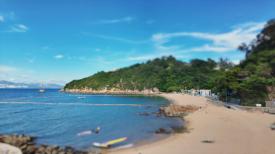
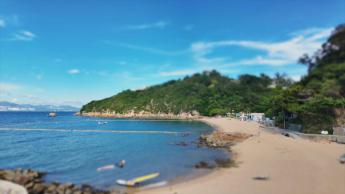
      Hong Kong has a total of 261 outlying islands, and Cheung Chau may be one of the most well-known islands among Hong Kong people. In 1996, LEE Lai-shan, the indigenous inhabitant of Cheung Chau, won Hong Kong’s first Olympic gold medal in windsurfing. Since then, there has been an inseparable relationship between Cheung Chau and windsurfing, and many people were attracted to Kwun Yam Wan, the venue famous for practising windsurfing by LEE.

      Since its establishment by Derek’s grandfather, the store at the end of Kwun Yam Wan Beach has been passed down to the third generation, with a history of over 70 years. It has witnessed the ups and downs of windsurfing in Cheung Chau. Although the store remains on the same beach, it has been passed down from generation to generation, and the mode of operation is different for each generation. Derek, the successor of the third generation, has injected an extraordinary vitality into the store.

      Living on the island and growing up on the beach, Derek has fond feelings for the sea. Apart from working in the store, Derek is also passionate about windsurfing. His passion for water-based sports has influenced his son Jadon, making it possible for Jadon to become a member of the Hong Kong Wingfoil Youth Team and represent Hong Kong in competitions. Being known as a “Cheung Chau boy”, Jadon is not just passionate about wingfoiling. What’s more, he wants to be recognised as a “Cheung Chau windsurfer”. Maybe this is the sense of identity passed down by Cheung Chau windsurfers.

      Apart from the indigenous inhabitants of Cheung Chau, people from outside the island are also attracted by Kwun Yam Wan and windsurfing. Stephanie moved to Cheung Chau with her mother in her teens. When she was young, she was not particularly fond of water-based sports. It was not until her thirties that she happened to learn windsurfing, and has lived a different life since then.

      Windsurfing is just a medium allowing different kinds of “Cheung Chau people” to get up close with the sea and feel the unique charm of the Cheung Chau island.

      02/06/2026
    • Sam Mun Tsai, Tai Po – Cradled by the Sea

      Sam Mun Tsai, Tai Po – Cradled by the Sea

      Human survival is inseparable from water.

      In the 1960s, the Government tackled water rationing by constructing the world’s first freshwater reservoir in a uniquely shaped bay in the northeast New Territories. The Plover Cove Reservoir holds more than just the drinking water we use daily; beneath the surface lie several villages, whose inhabitants had to be relocated back then due to this infrastructure project.

      One of the villages is the Sam Mun Tsai fishing village. The villagers are primarily Tanka people who make a living by fishing. Sixty straight years have gone by since they moved to Yim Tin Tsai in Tai Po. Due to the subsequent decline in the fishing industry, the fishermen have switched to raising saltwater fish in fishing rafts, and even people from outside the area are drawn to Sam Mun Tsai to learn fish farming. As you pass through the houses in Sam Mun Tsai New Village, ascend the hill and then make your way down, a tombolo connecting Ma Shi Chau and Yim Tin Tsai comes into view. This tombolo helps stabilise the fishing rafts. The surrounding area has been designated as part of the Hong Kong UNESCO Global Geopark (Northeast New Territories Region) with both ecological and humanistic value.

      The unique topography near the Plover Cove has shaped the destiny of Sam Mun Tsai Village today. Sam Mun Tsai New Village retains the rustic charm of a fishing village, free from highly commercialised tourist attractions and shops. Although many villagers no longer “depend on the sea for a living”, they still preserve the fishing village lifestyle. They have known each other’s families for at least several generations and look out for one another in their daily lives. These portray the everyday reality of Sam Mun Tsai Village.

      26/05/2026
    • A lifelong bond with the sea

      A lifelong bond with the sea

      Hong Kong is surrounded by the sea on three sides, making swimming the earliest sport to gain popularity. Swimming sheds and bathing sheds emerged in an era when entertainment was scarce. As times have change, the number of the once-glorious swimming sheds has shrunk to just a few. Yet, a small number of bathing sheds still stand quietly on some beaches, silently guarded by some long-established swimming clubs. Many of their members have been practicing sea swimming for decades. Come rain or shine, they never miss a day of coming to the beach for a refreshing swim. In the sun-drenched waters and beside the historical bathing sheds, their decades-long stories with the sea are recorded. Their passion for sea swimming has not diminished with age. On the contrary, you see only the sincerest and happiest smiles beaming in the sunlight.

      19/05/2026