Presenter:Noreen Mir
Listen to #Hashtag Hong Kong every Sunday morning at 8.15
Focusing on issues affecting civil society, we'll hear from representatives of NGOs, associations, statutory bodies, and non-profit groups.
(Sundays 8.15am - 8.25am)
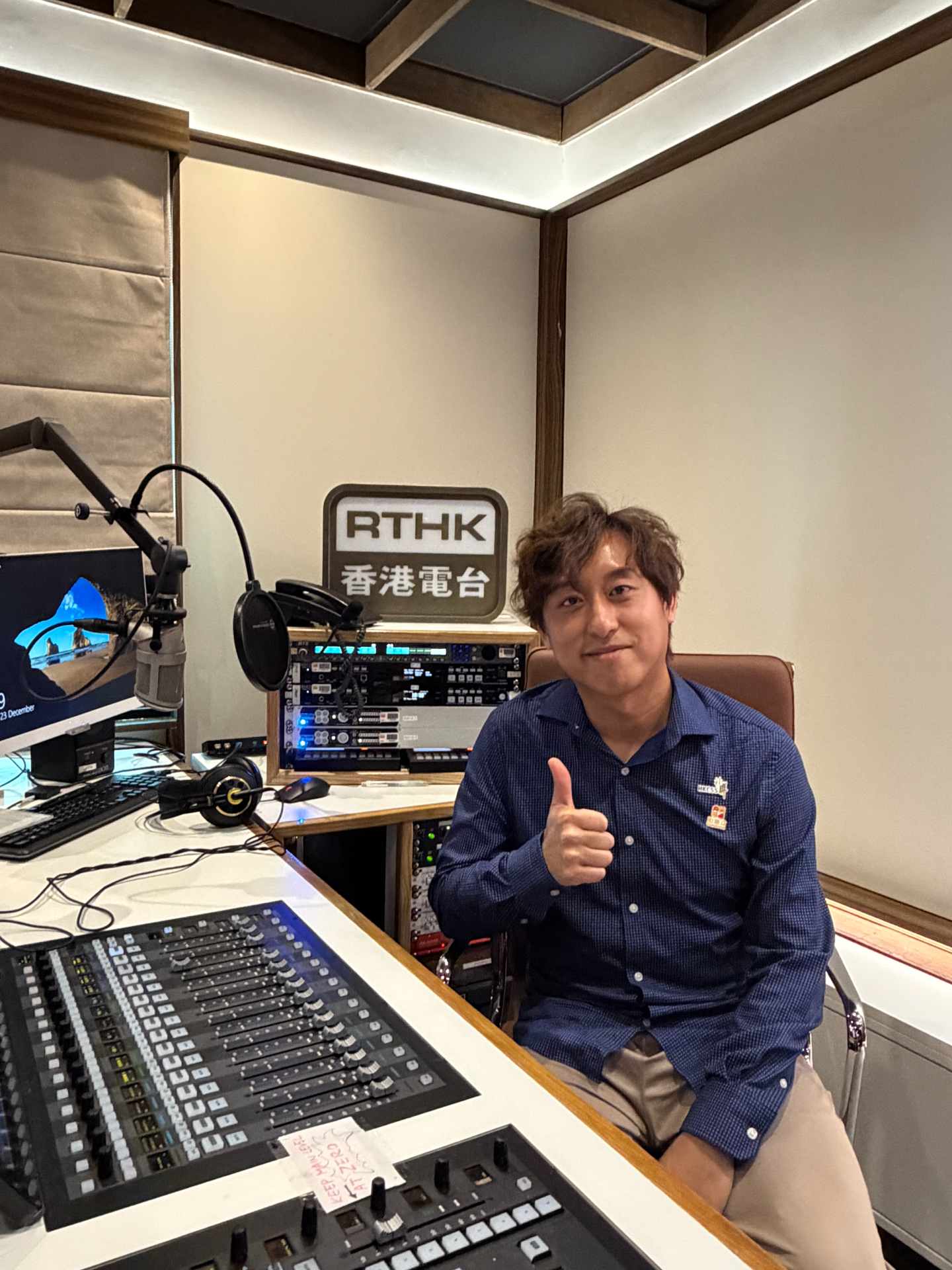

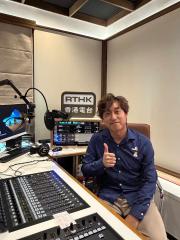
Hello everyone. Today, I’d like to talk about something that affects far more people than we might imagine, yet often goes unnoticed— and that’s dysphagia, or difficulty swallowing.
I want to begin with a real-life story: A few years ago, I met Mrs Cheung, a devoted daughter taking care of her elderly mother. At first, her mother coughed occasionally during meals. It didn’t seem serious, and her family thought it was partly related to aging. However, everything changed during the COVID-19 pandemic. After being infected, her mother’s ability to swallow deteriorated rapidly. She could no longer handle her usual meals, not even congee.
For Mrs. Cheung, each mealtime turned into a source of anxiety. She watched her mother lose weight, strength, and happiness, while every choking incident filled the family with dread. She expressed feeling helpless, caught between the need to safeguard her mother from the dangers of eating and the pain of watching her struggle with something as basic as eating. For many caregivers, this emotional burden is as heavy as the practical challenges they face.
This is not just a story; it’s real life, and it may resonate with many people because dysphagia happens more often than we realise.
Dysphagia simply means difficulty swallowing, but behind this simple term are complex causes. Swallowing actually involves over 30 muscles and several coordinated steps—from the mouth, to the throat, to the esophagus. When any part of this system is weakened or damaged, swallowing can become unsafe.
There are many possible causes. This includes neurological conditions such as stroke, dementia, or Parkinson’s disease, head-and-neck cancers, age-related weakening of muscles, or structural issues such as narrowing of the esophagus.
Symptoms of dysphagia can vary widely. Some individuals may cough or choke during meals, while others feel as though food is “stuck” in their throats. Many silently lose weight or become dehydrated because eating becomes stressful or exhausting. If untreated, dysphagia can lead to serious complications, including pneumonia, malnutrition, and repeated hospitalizations.
Speech therapists play a vital role in both diagnosing and treating this condition. Depending on the underlying cause, therapy may include strengthening exercises, postural adjustments, or modifications to the texture of food and drinks. For many individuals, safe eating begins with simple yet essential adaptations—like opting for softer, smoother, and easier-to-swallow foods.
In Hong Kong, dysphagia is becoming increasingly prevalent. Our population is aging rapidly, with census projections indicating that one in three residents will be 65 or older by 2036. As we live longer, more people will face swallowing difficulties at some point. This issue extends beyond medical concerns; it impacts families, caregivers, and the social systems that support them.
To ensure that older adults, individuals with disabilities, and patients recovering from illnesses can thrive, we must prioritize their ability to eat well. Eating is not just about nutrition; it embodies dignity, pleasure, and connection.
This is where Care Food comes into play.
Care Food is more than just “soft food” or blended meals; it’s thoughtfully designed to meet various swallowing abilities while remaining nutritious, visually appealing, and culturally familiar. Adhering to the IDDSI international standards, Care Food clarifies how soft or thick a food item should be to ensure safety for those with dysphagia.
However, Care Food goes beyond safety. It aims to restore confidence, dignity, and the joy of sharing meals. Rather than unappealing mush, Care Food dishes can be colorful, well-presented, and resemble the original ingredients—ranging from vegetables to dim sum. For someone with dysphagia, being able to enjoy a meal with family again has a profound emotional impact.
At the Hong Kong Council of Social Service, we recognized early on that dysphagia presents a growing challenge, making community-based solutions essential. Since 2017, we’ve been leading the development of Hong Kong’s Care Food ecosystem.
We collaborate with NGOs that support older adults and individuals with disabilities, speech therapists and healthcare professionals. We also work with restaurants and food suppliers, and government departments.
We develop standards, training programs, and public education campaigns, collaborating across sectors. Over 240 restaurants now offer Care Food menus, enabling worry-free dining for families. Our community program teaches caregivers—family members and domestic helpers alike—how to prepare safe and tasty meals at home, supported by a Care Food website with free learning videos. These efforts are transforming how Hong Kong addresses swallowing difficulties, and we are dedicated to making safe and enjoyable eating accessible to everyone.
Now, returning to the real-life story of Mrs. Cheung’s mother - after transitioning to Care Food under the guidance of her speech therapist, her mother’s appetite gradually returned. Meals became safer, more calming, and enjoyable. She regained strength and, most importantly, could again sit at the table and share meals with her family.
For Mrs. Cheung, this was a turning point. “Care Food gave us our mealtime back,” she said. “It restored my mother’s dignity, and it gives us hope.”
If you or a loved one is facing chewing or swallowing difficulties, know that you are not alone and support is available. Speak to a speech therapist or visit the HKCSS Care Food website to learn more about dysphagia and how Care Food can assist you.

Presenter:Noreen Mir
Good morning everyone. I wanted to start by asking a question, a serious question, but I think one that needs to be asked. What does it take for men to talk about mental health? I wanted to talk about my own journey, and for me, it started with one conversation and one friendship that changed how I lead teams and how I approach life. And with that, three principles guide me every day. The first is to be kind, be authentic and also to be accountable. And this sounds simple, but they do shape every decision I make.
Being kind is about kindness, clearly, but kindness can feel like a luxury in a city that's driven by speed and success. Pressure, deadlines and competition often push that kindness aside. When we focus on the stress of everyday life. But for me, kindness isn't soft. It's strategic. It builds trust, and trust builds teams that thrive. Now, whether you're the cleaner or the Chief Executive. Respect to me has to be the starting point. And I think often it can be the other way around where people are looking for respect to be earned. I think you start with respect and come back from that.
In Hong Kong's high pressure environment. I think kindness creates psychological safety. And for me, that's the foundation for mental good health. The second is about being authentic. Authenticity is something that I've learned, unfortunately, the hard way. Early in my career, I kept very strict boundaries between work and life, thinking that that was professionalism, and I had to keep up that guard of being the senior person or the manager.
Then I met Laurence. Laurence was a very star performer in my team. His energy was absolutely outstanding. His performance was always great, but I did start to notice a drop in that performance. I could treat this as a performance issue. In fact, by a lot of my managers, at that point, I was encouraged to do so, but I didn't. I took time and asked Laurence what was wrong. The conversation revealed a much deeper story. Laurence was a young war veteran out of Afghanistan, and he carried very, very invisible scars. What we realized that with support, he actually let us know a little bit more about what was happening and the impact that was having on his ability to sleep, his ability to work, his ability to function, and with lots of support, I'm very happy to say that he returned much stronger than ever before, which was a benefit to him, it's a benefit to us, it’s a benefit to the business, but it just showed that that human-centered approach really made a difference. Now, some years past, Lawrence moved to Hong Kong way before I did, and when I did move here, he was one of the first faces I looked for. Quickly that hierarchy disappeared and we became very, very close friends.
Unfortunately, not much longer after I'd moved to Hong Kong, Lawrence lost his battle and Lawrence is no longer with us. Losing Lawrence taught me something invaluable in that relationships matter much more than titles. Since then, I've chosen vulnerability as a leadership tool. When leaders show openness, they give permission for others to do the same. And that's where real change begins.
Culture eats strategy every time. Now, being accountable is also pretty critical. Accountability isn't just about results. It's about people. In mental health, it means knowing your own limits and supporting others sustainably. Last year, I lost someone very close to me and I was flying home to the UK repeatedly and this took a massive toll on how I juggled work, I juggled family and ultimately my own health. I ignored my own warning signs, physical injuries, exhaustion until basically my body forced me to stop. Once again, I was taught a very humbling lesson. Leadership isn't about being invincible. It's about modeling, resilience, and self-care as well as those around you. Creating cultures with psychological safety at their core is one of the most important missions leaders can take on when people feel safe to speak up.
Teams don't just survive, they thrive. I go back to that culture eats strategy for breakfast every time. So why does this matter? The need in Hong Kong is clear. 40% of employees in Hong Kong reported mental health problems in the past year, and we do believe that's underreported, especially if you think about the physical manifestation of some of these things, such as an upset stomach or even getting tired and getting the flu because you're not sleeping properly.
Break that down - one in four face challenges like fatigue, anxiety, and sleep issues. But these aren't just numbers. They're not just statistics. They're colleagues. They're your friends. They're your family. Mental health must be a boardroom priority, not just an afterthought. And that is one of the missions of CMHA in Hong Kong. So how does the City Mental Health Alliance Hong Kong help? And why does that matter?
I've been with the organisation now, luckily for three, nearly four years, and worked with wonderful people like Hilleke and Iona. CMHA HK partners with businesses to embed mental health into the DNA of corporate culture. There is no other organisation that does it this way and this is how we do it.
We train leaders. We train them to talk openly and lead with empathy. We build policies that make support practical, not just aspirational. We create peer networks so employees have someone to turn to. And we benchmark progress. So companies are held to account, know where they stand and build those workplaces and create that safety.
So why is this powerful? By helping corporates transform their approach, we reach entire workforces, that scale through them. Then we can impact the wider community. And that's the responsibility of business in Hong Kong and many of these corporates. It’s how I bridge the personal ambition to help people with the corporate influence that my role fortunately unlocks. And I take that responsibility very, very seriously. When businesses lead on mental health, the ripple effect touches families, it touches friends and it touches those people that we've talked about and the society of Hong Kong, which is a city I love.
So my message to Hong Kong: Look up. Be kind. Be authentic. Take responsibility. If you have the capacity and you need to know that you've got that resilience, check on those people around you. If you see someone that's struggling, ask them, are you okay? That question can literally change your life.
Men's mental health isn't a niche topic for one month a year. Not just because you can see people sporting a mustache on their face. It's a year round leadership discipline. It's a community responsibility. And it's yours personally with your friends, your family. Strength isn't silence. Strength is honesty, action, and it's care. So let's make it easier for ourselves, but also for one another to live one life well.
So the hardest question that I've been asked today is to then think about a song that we can dedicate. So for everyone that's listening, that's facing mental health challenges. And in memory of my great friend Lawrence, I dedicate Nothing Else Matters by Metallica, a song about authenticity, connection and what really matters.