
Hot Search

X

    簡介

    GIST

    Executive Producer:Chan Wing Kam


    In recent years, the well-being of carer has received significant social attention. Social welfare organizations estimate that there are over a million carers in Hong Kong, who often bear tremendous physical and mental stress. Whether living with patients or the elderly, carers must accompany them to follow-up appointments, ensure timely medication, and assist with basic needs such as using the toilet and bathing. As their responsibilities grow, so does their stress, leading some carers to feel overwhelmed and develop emotional issues, which deserves societal attention and increased support.

    The government and community have invested considerable resources to assist carers. This series, titled "Stories about Carers" introduces various services and support through different carer stories, including household assistance, day care, nursing, and rehabilitation, to help carers feel less isolated. It symbolizes providing carers with a "door" to remind them that they must care for themselves as well, helping them see a way forward.

    This series covers a variety of carers, including those caring for individuals with disabilities, rare diseases, children with special educational needs, elderly carers, people with intellectual disabilities, those with serious or chronic illnesses, cognitive impairments, and mental health issues. It will also introduce various services, such as support hotlines, day respite care, mental health recovery service centres, elder tech, adult training centres, and end-of-life services, to help the public understand how community resources can alleviate their burdens and provide them with breathing space.

    最新

    LATEST
    08/10/2025
    Photo Album
    Photo Album

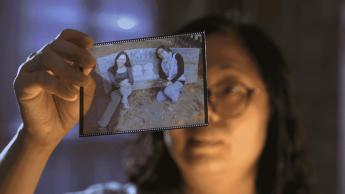
    Monkey reconnected with her elementary school teacher, Erica Chan, in 2008 and became her primary caregiver after learning of her stage four cancer diagnosis, sharing the burden with Erica's husband. During the journey of accompanying Erica until her passing, Monkey, encouraged by her teacher, not only rediscovered her passion for art but also learned to confront life, death, and regrets. More importantly, she created precious memories with Erica throughout the caregiving process.

    Ding Ding, inspired by her own experience caring for her mother, established the "Human Flower Journal" project to provide caregivers with a space for relaxation and emotional release. Monkey will collaborate with Ding Ding in a limited partnership to support more caregivers in the "mental garden."

    重溫

    CATCHUP
    07 - 10
    2025
    RTHK 31
    • The Last Homework

      The Last Homework

      Monkey reconnected with her elementary school teacher, Erica Chan, in 2008 and became her primary caregiver after learning of her stage four cancer diagnosis, sharing the burden with Erica's husband. During the journey of accompanying Erica until her passing, Monkey, encouraged by her teacher, not only rediscovered her passion for art but also learned to confront life, death, and regrets. More importantly, she created precious memories with Erica throughout the caregiving process.

      Ding Ding, inspired by her own experience caring for her mother, established the "Human Flower Journal" project to provide caregivers with a space for relaxation and emotional release. Monkey will collaborate with Ding Ding in a limited partnership to support more caregivers in the "mental garden."
      08/10/2025
    • Hand in Hand

      Hand in Hand

      Because of love, the originally rugged path can continue, allowing each other to avoid loneliness.

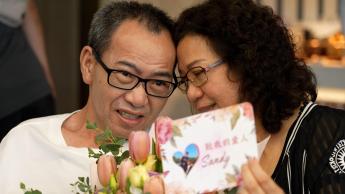
      Sixty-three-year-old contractor "Brother Gai" has been in a relationship with his girlfriend Sandy for 30 years. However, a diagnosis in 2022 changed everything. Brother Gai was diagnosed with motor neuron disease, and within just a year, his condition deteriorated to the point where he could no longer move or speak. In an instant, Sandy transformed from a pampered woman into a caregiver, taking on the responsibility of caring for Brother Gai and cherishing the limited time they have left together.

      Fortunately, through the collaboration of government agencies, the Tuen Mun Hospital's palliative care team, and community groups like the Anglican Church's Elderly Community Centre's palliative care services, Sandy and Brother Gai received the professional support they needed to "live well" in their remaining time. This support allows them to not feel alone on their caregiving journey and to walk further together.
      01/10/2025
    •  Unwavering Guardianship

      Unwavering Guardianship

      "The story of a lifetime between two brothers" captures the relationship between older brother and younger brother, a tale of love, responsibility, and hope.

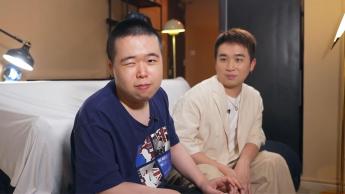
      From a young age, Simon knew his brother was different. His brother's movements, communication, emotions, and intelligence were all unlike those of others. Faced with various "quirky" behaviors resulting from his brother's condition, Simon once chose to distance himself from his brother and family. He would avoid going out with him and preferred to sit at a separate table during meals to prevent others from knowing about him. However, as their mother aged, Simon gradually realized that caring for his brother was a responsibility he could not escape, and he was the family's only support. Consequently, he enrolled in courses related to social work and nursing, eventually becoming a social worker dedicated to helping others help themselves. On the day of his graduation photoshoot, the embrace shared among the family confirmed the true meaning of "the story of a lifetime between two brothers."

      The bitterness and sacrifices of caregivers often go unnoticed. Facing the long journey of caregiving and supporting caregivers is not just about coordination among family members; it's also a societal responsibility. Therefore, the older brother attends the "Fu Hong Association" Adult Training Center, funded by the Social Welfare Department, from Monday to Friday. There, he receives training and daytime care, finding a space that belongs to him while allowing the family some much-needed respite.

      24/09/2025
    • A Unique Child Ⅱ

      A Unique Child Ⅱ

      In the early morning hours, caregiver support hotline social worker Janet sits in her office, waiting for each call.

      “Hello, caregiver support hotline... Are you looking for respite care?”

      As usual, Janet searches the database for suitable openings, but she pays close attention to the caller's tone, as each caller may be teetering on the brink.

      Mrs. Cheng is one such caller.

      Mr. Cheng suffered a stroke a few years ago, resulting in reduced mobility in his lower body and requiring long-term care. What worries Mrs. Cheng the most is that her husband might collapse at any moment.

      Sensitive Janet encounters a variety of cases daily and senses that Mrs. Cheng has reached a breaking point:

      “I’ve thought about just ending it all...”

      And Mrs. Cheng is not the only one.

      Caregiver Yoki has also faced the pressures of caregiving, reaching a breaking point emotionally.

      Yoki has a daughter, Haley, who suffers from the rare condition known as "stone disease." Currently, there is no cure for this rare illness; only medication can provide relief. With medication costs exceeding one million a year, Yoki, who has already quit her job, feels overwhelmed.

      Fortunately, through her caregiving journey, Yoki has gradually realized that caregivers must take care of themselves. In this episode, Yoki will embark on a little trip with the host to reflect on her own needs.

      17/09/2025
    • A Unique Child Ⅰ

      A Unique Child Ⅰ

      Eleven-year-old student (Haley) suffers from a rare condition known as "stone disease," which locks certain important joints and causes a hunchback, affecting her upper body mobility. She cannot use the restroom independently and requires 24-hour care.

      Her mother, Yoki, is the primary caregiver and has been by her side throughout her battle with the illness. However, Haley faces not only physical limitations but also the endless restrictions that come with her condition.

      Haley loves ice skating and biking, but the enemy of "stone disease" is injury. If a patient falls, wounds may not heal automatically, potentially leading to new bone growth and the risk of permanent disability.

      "Letting her try means facing the risk of permanent disability, but with limited time, should we allow her to try and enjoy life as much as possible?"

      Haley’s condition is estimated to occur in only 1 in a million people, making her a rare case. Yoki worries that Haley will become weaker over time, so she has decided to give up her stable job to spend more time with Haley, cherishing the moments when they can still go out together as a family.

      10/09/2025
    • Our Shared Journey

      Our Shared Journey

      Grandma Mak and Uncle Wu have no children and have lived together, supporting each other for many years. However, when the news of the demolition in Tai Hang West arrived, the couple began to worry about finding a new home. Suddenly, Grandma Mak collapsed on the street.

      At nearly 90 years old, Uncle Wu had to find a new place to live and move, all while caring for Grandma Mak, who was unable to take care of herself after injuring her leg. They both realized that this situation could not continue. Uncle Wu found a suitable elderly care home, and after struggling with the decision for six months, Grandma Mak finally resolved to move in. Uncle Wu insisted on visiting her every day. Over time, Grandma Mak began to adapt to life at the care home, where she also received physical therapy and other services. The care home occasionally organized promotional events for new caregiving products, and Grandma Mak discovered that soft food options made life more enjoyable for the elderly.

      The couple gradually found a new rhythm in their lives. With the reconstruction of Tai Hang West approaching, they revisited familiar places, stirring up half a lifetime of memories and reigniting hope for the future.

      03/09/2025
    • One and Only

      One and Only

      This episode tells the stories of two mothers caring for children with Special Educational Needs (SEN).

      Mom Ho’s son, Hei, was diagnosed with autism at a young age, but her husband has always been unwilling to accept it. Later, their son was also diagnosed with schizophrenia, which her husband similarly refuses to acknowledge. Lacking understanding and support from her partner, Mom Ho has had to walk this path alongside her son alone, caught between her husband and her child, bearing the pressure of being the sole caregiver.

      Eventually, she began to show symptoms of depression. She told her son’s psychologist that if she couldn’t change her husband’s mindset, she would have to change herself. In recent years, she found companionship at the Baptist Oi Kwan Social Service’s Family Resources and Services Centre for Mental Health Rehabilitation, where she could share the difficulties faced by caregivers, finally feeling understood.

      Mom Ho and Hei’s story may inspire the other main characters, Ka Ka and Choi Choi. Choi Choi, a fourth grader, has Attention Deficit Hyperactivity Disorder (ADHD) and autism spectrum disorder, and is raised solely by his mother, Ka Ka. Diagnosed with depression from a young age, Ka Ka often worries that she cannot care for Choi Choi on her own, feeling a lot of anxiety and guilt, making it hard to express the immense pressure she faces.

      Understanding and mature, Choi Choi recognizes that his mother sometimes feels sad. He has his own ways to comfort her, which may not always be the best, but with the help of a social worker, he gradually learns about his mother’s needs. Conversely, as Ka Ka witnesses Choi Choi’s growth, she also learns to appreciate herself and affirm her worth as a mother.

      27/08/2025
    • Looking Back on Memories

      Looking Back on Memories

      At 100 years old, Kim Yong has reached the age of enjoying her twilight years, while her nearly 70-year-old daughter, hopes her mother can cherish each day in a peaceful home. However, as her mother's physical abilities decline and after a fall, mobility becomes difficult, and she rarely goes out. daughter feels that even with caregivers, the emotional and physical care for the elderly goes far beyond that. To slow down her mother's cognitive decline, daughter reconnects with her through memories, rekindling their conversations and relationship. Both mother and daughter, who share a love for Cantonese opera, take their first family trip together to Lamma Island, cherishing the time spent enjoying their shared passion.

      13/08/2025
    • The cause of my bliss

      The cause of my bliss

      Marine's daughter, Cassie, was born at less than 27 weeks and was admitted to the intensive care unit due to underdeveloped organs, which later led to retinopathy. Although her visual impairment is not life-threatening, Cassie suffers from a rare congenital condition called Hirschsprung's disease, where her entire large intestine lacks nerve cells, making normal digestion impossible. Doctors predicted she would not survive past ten months. After multiple medical interventions, Cassie successfully reached the ten-month mark, but she remained hospitalized until she was three. Marine struggles to describe how she endured those difficult days, only recalling the persistent smell of bleach in the hospital, which left her emotionally drained from the frequent admissions.

      As Cassie gradually grew stronger, she was finally discharged and began attending the Hong Kong School for the Blind, where her health started to stabilize. Despite only being able to consume liquid food and facing delays in her learning due to treatment, Cassie remained optimistic, often saying, "It's good enough now." A few years ago, Marine lost her husband and no longer insists on anything; she simply hopes for Cassie's healthy and happy growth. Cassie loves music, and Marine wholeheartedly supports her in learning to play the piano, sing, and compose. Although Marine balances work with caring for her daughter, she hopes to create an NGO to provide opportunities for Cassie and other visually impaired children to express their musical talents.

      06/08/2025
    • Another Day

      Another Day

      Mr. Ho met his wife Connie when they were young in Australia, where both worked in the restaurant industry and served as head chefs at various large events. They even opened a restaurant together in Australia, working hard as a couple. Later, they moved to Los Angeles, where Mr. Ho continued in the restaurant business, while Connie stopped working.

      Life was going well until Connie began to show symptoms of illness. Initially, their relationship faced challenges due to Connie's forgetfulness and emotional instability. Mr. Ho thought these issues might be related to Connie's menopause, so he took her to see a doctor. However, the doctor diagnosed Connie as being fine and advised them to change their lifestyle and habits.

      To seek more appropriate treatment, Mr. Ho ultimately decided to move back to Hong Kong with Connie. After being diagnosed by doctors in Hong Kong, it was confirmed that Connie suffered from early-onset cognitive impairment and depression. Before turning 60, she began to experience personality changes and memory loss, and by now (at 64), she has lost most of her language and mobility skills and requires round-the-clock care.

      For Mr. Ho, moving back to Hong Kong and transitioning from a chef to a security guard was not difficult as long as he saw his wife happy, which made him happy too. His biggest wish is to outlive his wife because he fears that if he leaves this world first, there will be no one to care for her as he does.

      30/07/2025